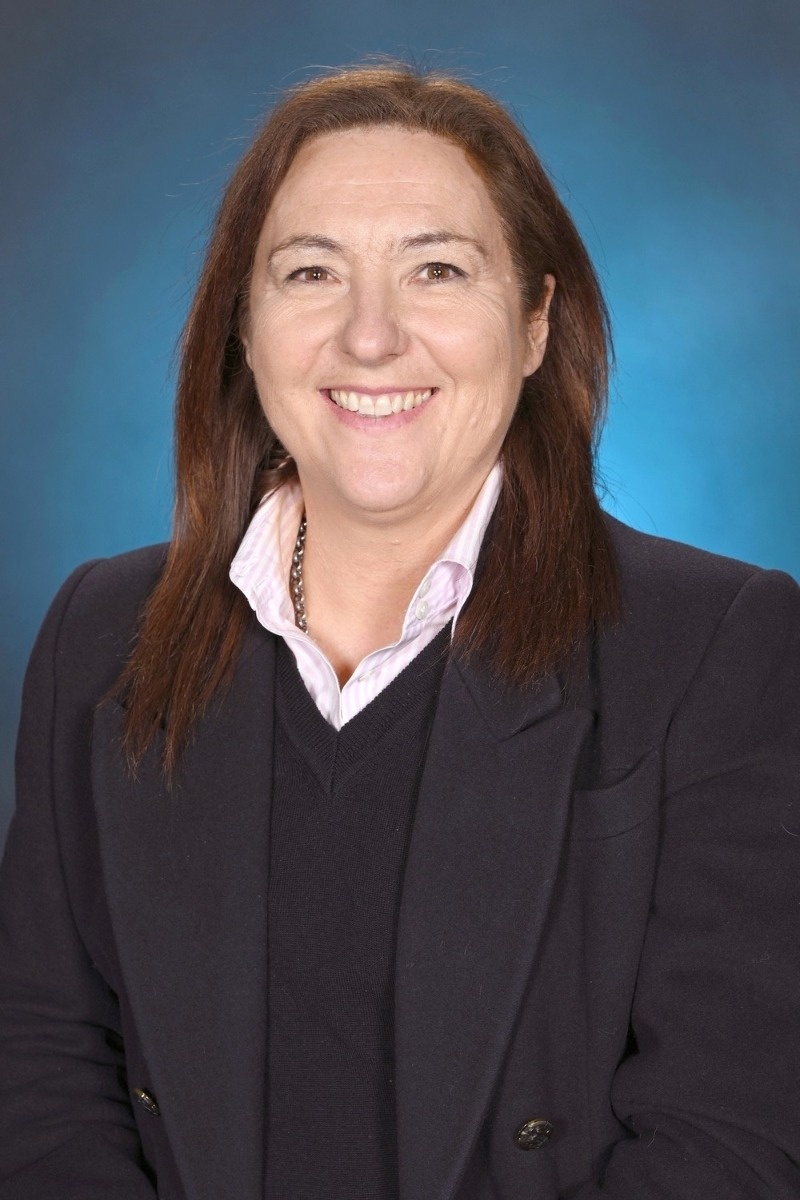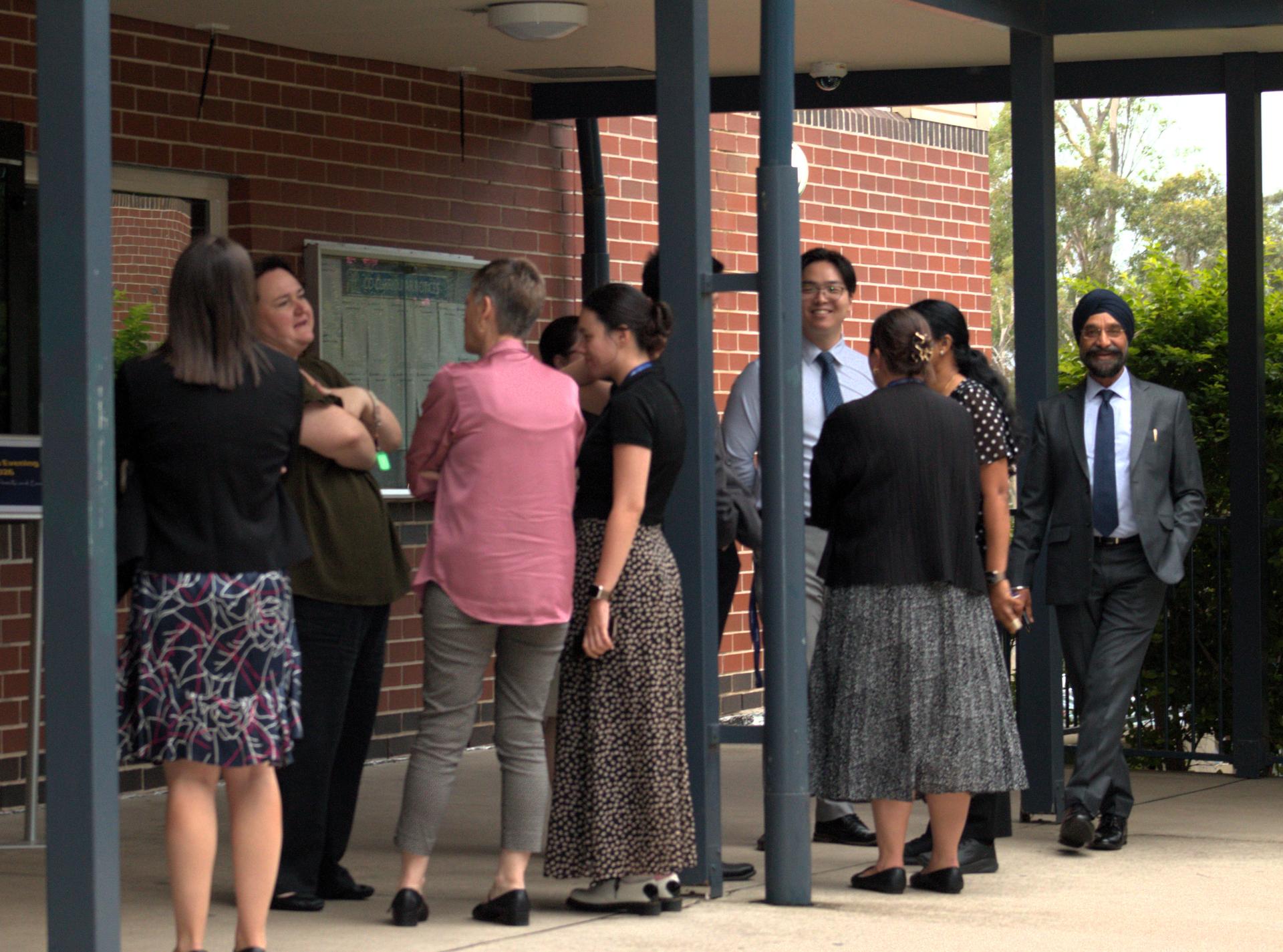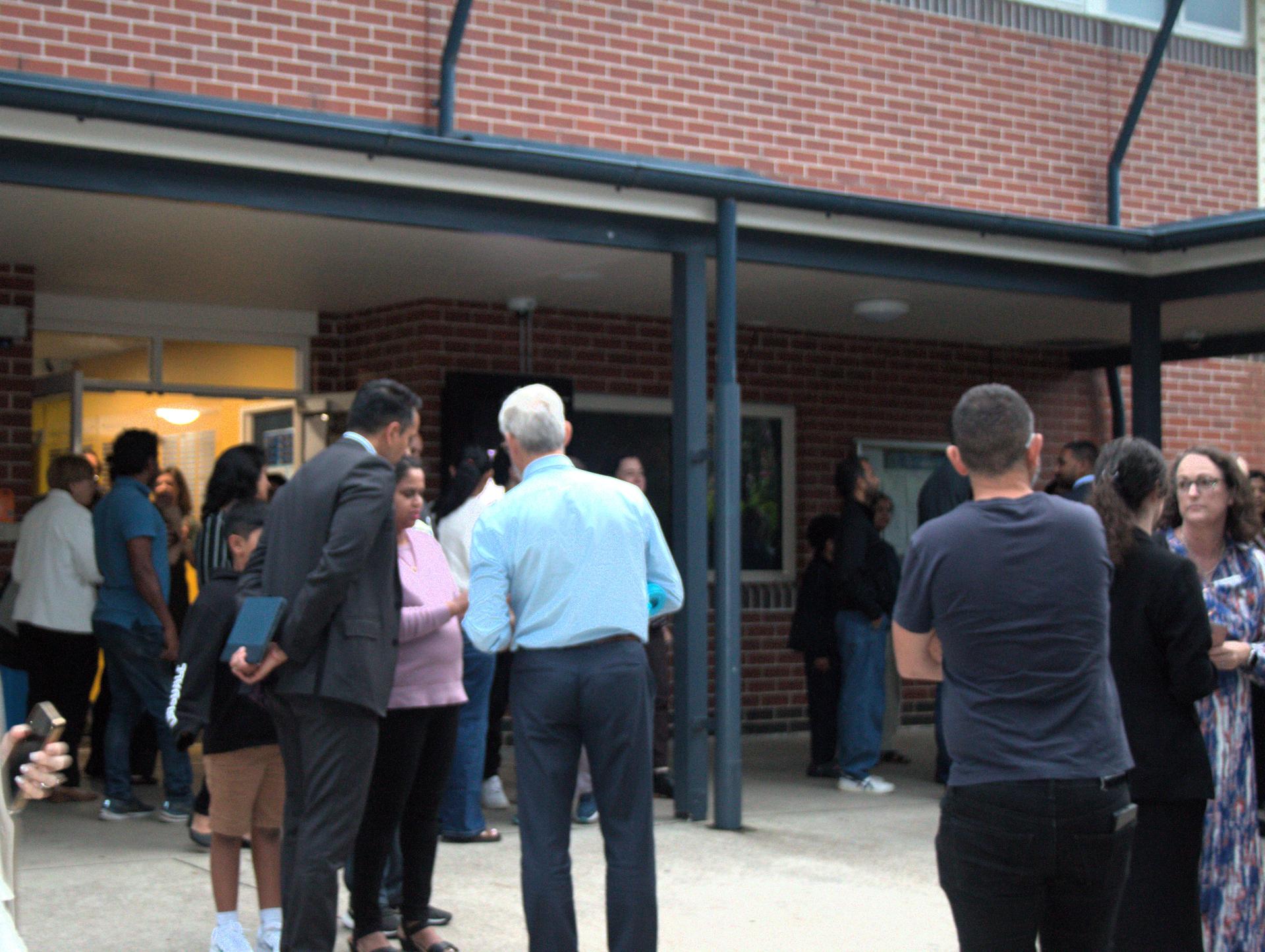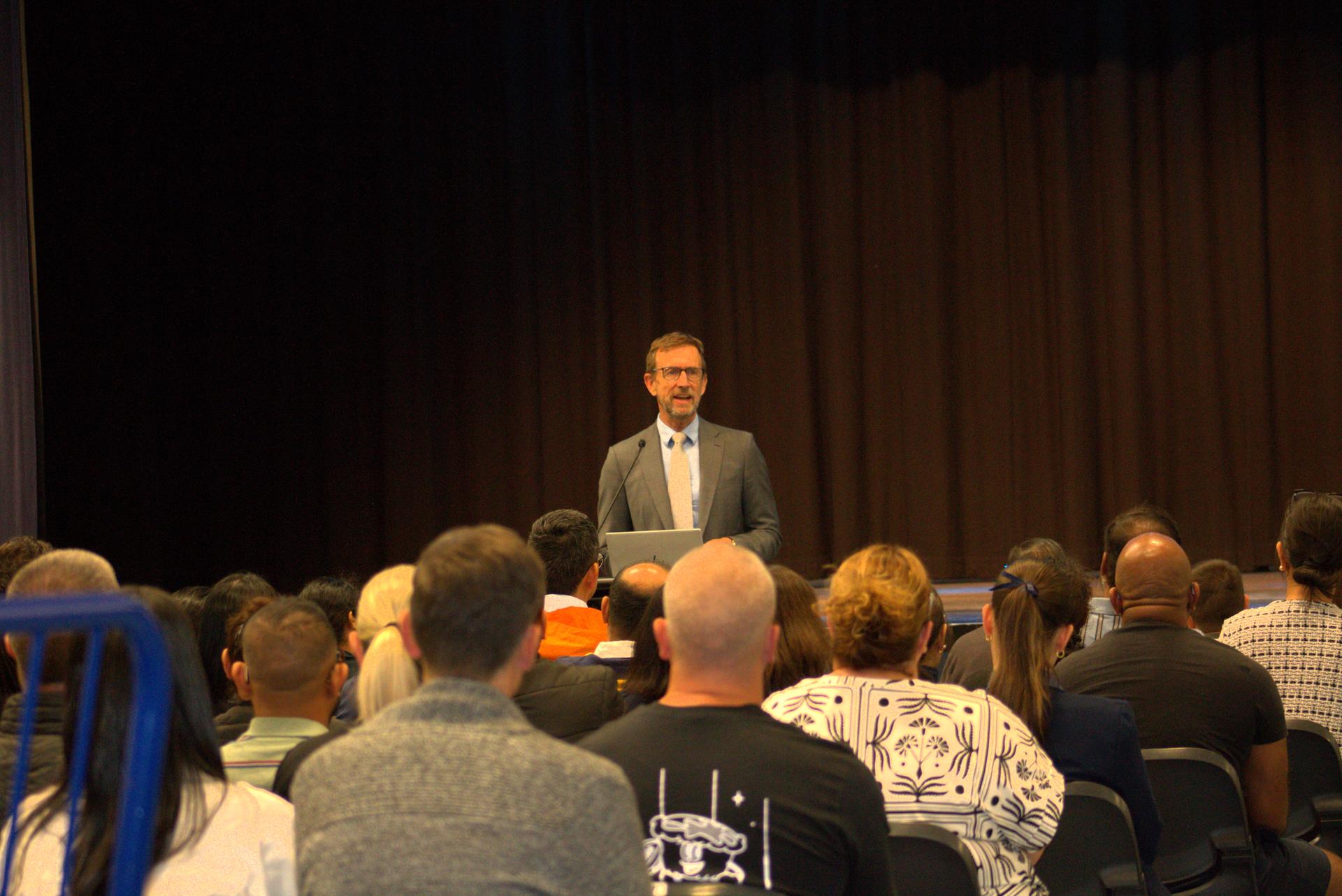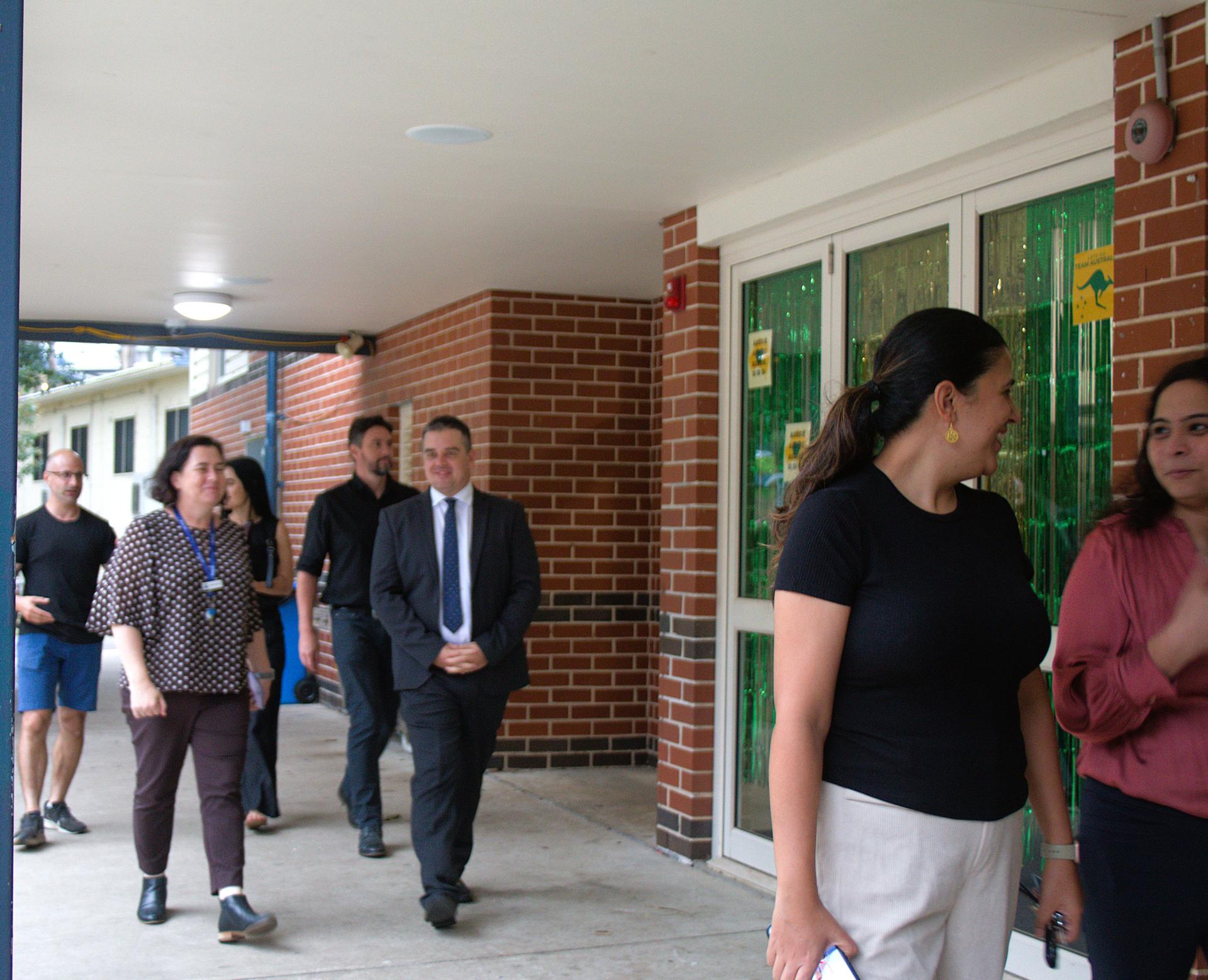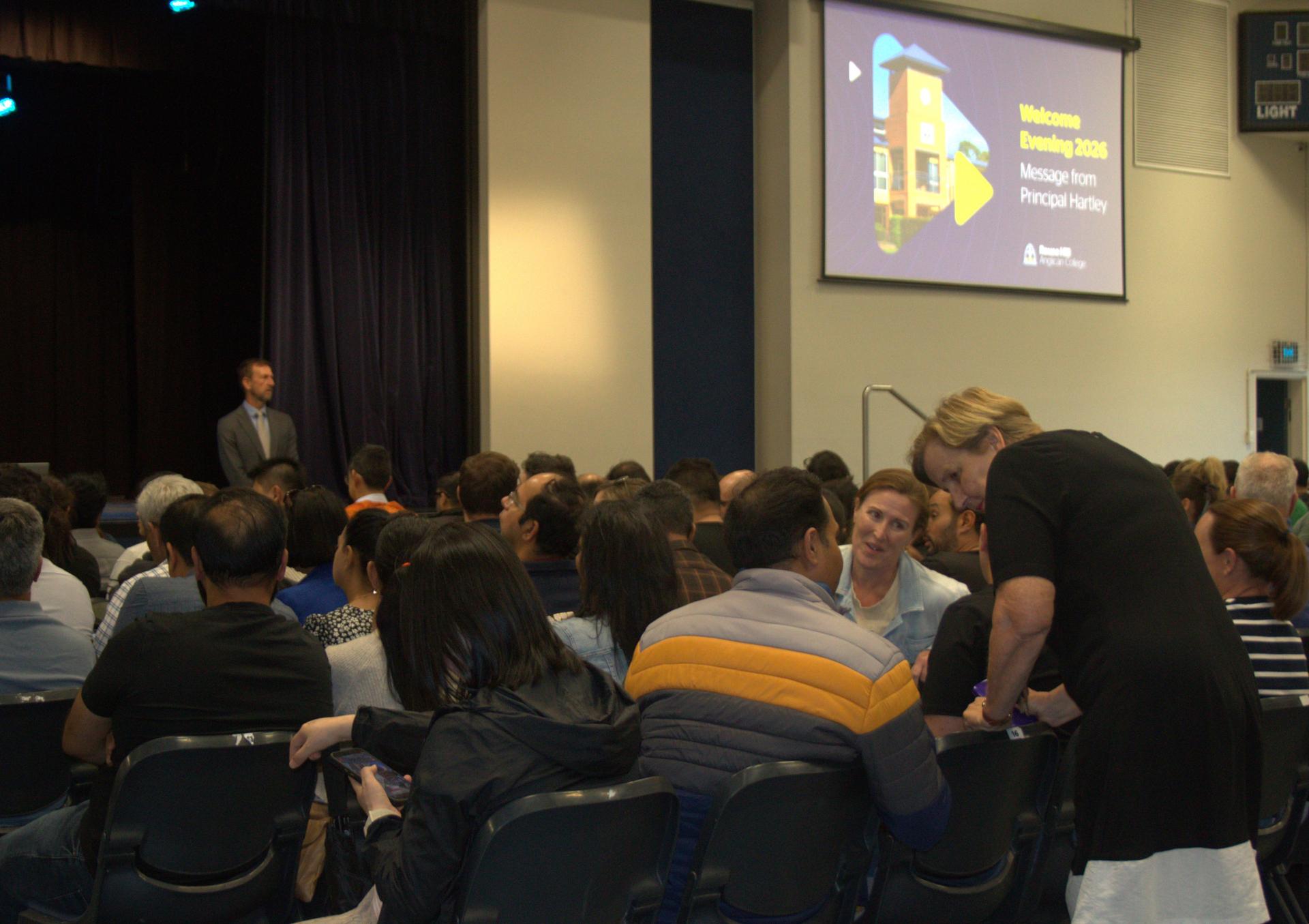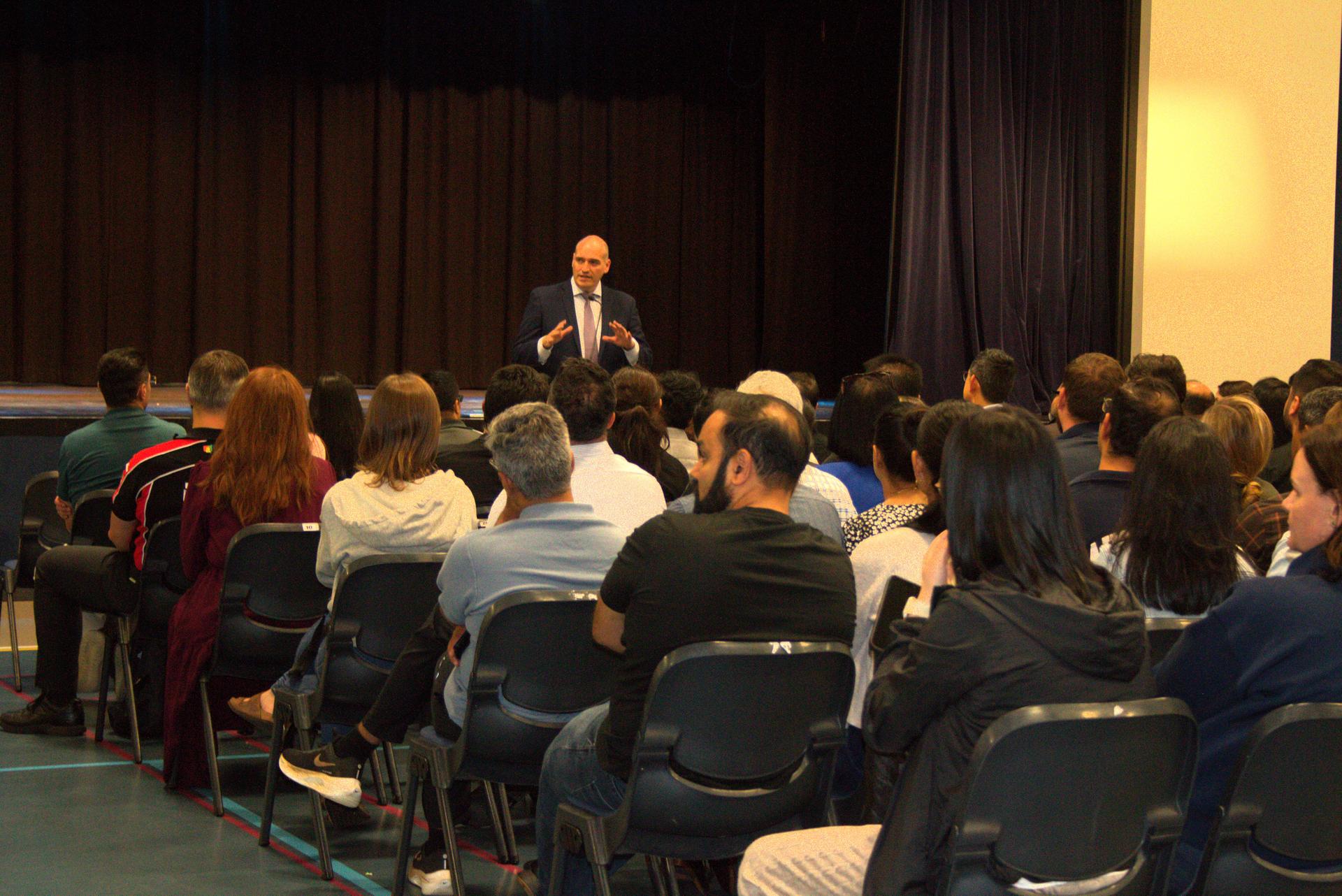
It was very encouraging to see so many parents at our annual Welcome Evening recently. I trust that those who came were able to connect with staff and found the information shared valuable. My address to parents was wide ranging, and although I apologise for running over time, I trust that what I shared was informative and helpful.
During the evening, I shared some of the positive and encouraging feedback I have received from parents recently. Thank you for your words of affirmation. While reflecting on success is important, every school can improve. At times, school staff work earnestly and productively for the benefit of students, yet may overlook areas for improvement which parents may see more clearly. Therefore, parents completing a survey coordinated by imageseven, an independent marketing and communications firm, will be very helpful. Your valuable feedback will contribute to our work with imageseven, helping ensure that our marketing and communications continue to meet the needs of our school community. The survey was emailed to parents today, 20 February.
Successful organisations thrive when they have a clear sense of direction. Recently, the Executive Team and the RHAC Council recently approved our Strategic Intent for 2026 to 2030, which is posted on our website .
The strategic intent explains:
- RHAC’s five teaching and learning principles, which are the foundation for how teachers teach and how students learn.
- how the college intends to further support and improve student involvement in sport, music and extracurricular activities.
- our commitment to a culture of service.
- our commitment to students achieving academically, recognising that strong academic results give students more options and opportunities for their future after school.
At the Welcome Evening, I also introduced the Character Education project, led by our Head of Student Opportunities, Mr Luke Adams. This initiative is grounded on research from the Jubilee Centre for Character and Virtues, which have found that intentional character education leads to:
- Improved student well-being
- Stronger relationships
- Better academic outcomes
We look forward to sharing more about this important project with parents in future editions of this newsletter in 2026.
I would like to conclude by returning to a topic that I have raised many times: reducing screen time. I have previously likened small screens (e.g. smartphones) to hot chips or chocolate. While smartphones can be helpful, they are inherently addictive for children and can be harmful. Therefore, parents and teachers need to work together to limit children's access to these devices and to view them just like hot chips or chocolate, i.e. a treat rather than a staple food.
At the Welcome Evening, I offered some practical tips for reducing their children’s screen time at home. Ultimately, parents decide when and how their children use devices outside of school hours. However, I trust that the tips I provided were helpful.