Every term, our students spend over 17,000 minutes at school, that’s over 68,000 minutes a year and over 952,000 from the beginning of PreK to the end of Year 12. Even though this might sound like a lot of time, there is so much we want to do with students, and we want to make every one of these minutes count.
Our timetables are carefully developed to ensure that these valuable minutes are divided between the Key Learning Areas including Mathematics, English, History, PE and Christian Education, other important activities such as chapel, assembly, extracurricular activities, peer support, and special events like carnivals, Compassion Day, and Celebration of Cultures Day. Because we don’t want our students to miss out on any of these things, I encourage you to ensure that your children are at school on time and ready to learn in time for 8:55am when students assemble to start the day.
We also recognise the importance of allocating time for our students to play. The two breaks during the day provide an important break from the structure of a classroom. These times provides students with the opportunity to eat and then run, play games, talk and spend time with their friends. These breaks also help students to develop social skills, independence, problem-solving skills and self-confidence as they negotiate games and play creatively with their peers. During these breaks, some of our students also participate in a Christian Cru group, SRC meetings, musical rehearsals. There is also time for play before school; however, please remember that supervision of students only commences at 8:30am.
The routines we teach our students help them to make the most of the time they have in class. The consistency, predictability and structure of routines help students know what is expected of them in the classroom. Once learned, students can independently follow them, reducing interruptions and increasing the time for teaching and learning. We have routines for entering the classroom, answering questions, moving between activities, reading aloud, discussions, handing out and collecting books, and checking for understanding. As these routines are learned and practised, they become automatic, allowing students to concentrate on learning. Perhaps there are routines that you use at home that help with making the most of your time, or you may like to consider whether there are routines you could add to your mornings or afternoons.
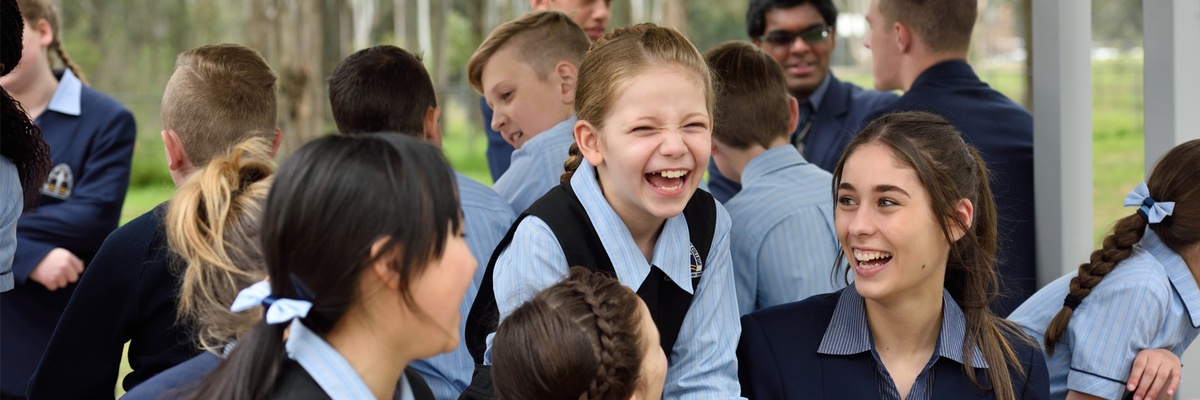
Importantly, school is more than just lessons and breaks, it is also a place of community and relationship. Teachers spend time getting to know their students individually and as a class. They build in time for joy, laughter and interactions. They take the time to help students when there has been a relationship breakdown and listen and guide students to make good choices. Teachers often give up their own breaks to ensure that students feel listened to and cared for. They also create opportunities to celebrate students’ successes and development. We are thankful that our community is comprised of students, school staff and parents. I love that this term we can welcome you to our chapels, assemblies, Celebration of Cultures (Harmony Day), and at the beginning and end of each day.
I am thankful that the day finishes with reading. Every day, our teachers in Years 3 to 6 read high quality novels to their classes. Over a year, students will hear books read for nearly 2000 minutes. These minutes are valuable because students’ listening comprehension generally outpaces their reading comprehension. This means that when teachers read aloud to their class at a level slightly above their students’ reading ability and guide the discussion about the books they are reading, students can comprehend texts they wouldn’t be able to understand on their own. Students can be introduced to a range of books that they probably wouldn’t choose on their own and increase their confidence in independently reading different books. This time is very important to our students, and I remind you that we ask parents not to come into the H-J Quad or surrounding areas until 3:25pm so that the classes are quiet and focused until the end of the school day.
Please support us as we make use of every minute:
- Ensuring your child is at school after 8:30am and before 8:55am.
- If you are picking up your child in the afternoon, please don’t congregate in the H-J quad before 3:20pm
- Parents picking up K-2 students can enter gate 5 from 3.15pm; parents picking up K-6 students can enter gate 5 from 3:25pm.
- Help your child to be organised and ready for school every day.
- Consider whether there are routines that you could practise with your children at home to make the most of the time you have with them before and after school.
- Join us for community events.